
James Clear once wrote, “Anxiety isn’t you. It’s something moving through you. It can leave out of the same door it came in.”
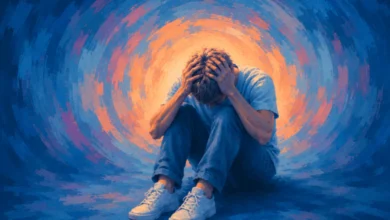
A woman experienced a panic attack while driving across a bridge years ago. She thought she might die that day. Her heart started pounding. Her breath became shallow and tight. Her chest felt constricted. A wave of dizziness washed over her.
She was driving 60 miles per hour with no place to pull over. The bridge stretched for miles over open water. She was alone in the car. A terrifying thought shot through her mind: Something is seriously wrong. She gripped the steering wheel and tried to keep driving, convinced she might pass out before reaching the other side. In that moment, it felt like her body had completely betrayed her.
For a long time afterward, she was afraid to drive. She lived in quiet fear of that feeling returning. She began avoiding certain activities and situations. She constantly monitored her body for signs that another attack might be starting. Even when she appeared calm on the outside, a part of her was always on high alert.
The Body Is Not the Enemy
The first idea that shifted things for her was this: the sensations of panic feel dangerous, but they are not. They are the nervous system sounding an alarm. When people perceive danger, the body activates a natural survival response known as fight-or-flight. Adrenaline floods the bloodstream, the heart beats faster, breathing quickens, and muscles prepare to react. This response evolved to keep humans alive.
If the nervous system is regulated, the rest-and-digest response prompts the body to return to a relaxed state once the threat passes. But when the nervous system has been under stress for a long time, it becomes imbalanced. The fight-or-flight response works on overdrive. The rest-and-digest response no longer functions properly. The body does not relax. The result: the nervous system sometimes sounds this alarm even when no real danger is present.
This was true for her. She was a single parent living in San Francisco and running a wedding photography business, a high-stress career. She spent hours in the car each day dealing with heavy traffic: a two-hour roundtrip commute getting her daughter to and from school, client meetings, evening engagement shoots. She photographed weddings most weekends, leaving three to four hours ahead of time because wedding photographers cannot be late. Rest was something she dreamed about. She was consistently exhausted, burnt out and on edge, with no end in sight. Her nervous system was essentially fried, which made her panic attacks more frequent. She lived in terror of the next attack.
When the body releases adrenaline unexpectedly, the sensations can feel overwhelming. Many people interpret those sensations as signs of catastrophe: Am I having a heart attack? Am I about to faint? Am I losing control? Those thoughts create more fear, which causes the body to release more adrenaline. A cycle forms: sensation leads to fear, which leads to more adrenaline, which leads to stronger sensations. It can feel like being trapped in a panic loop.
The Shift That Changed Everything
Her healing did not begin with trying to control the panic. It began with understanding it. For the first time, she saw that her body was not malfunctioning. It was responding exactly the way it was designed to respond. Her nervous system had simply learned to stay on high alert. Once that understanding settled in, something subtle but powerful shifted. The sensations of panic were still uncomfortable, but they no longer felt like proof that something catastrophic was happening. They became signals from a nervous system that had been carrying too much stress for too long. And nervous systems can learn new patterns.
Learning Safety Again
She realized that healing from panic is not about forcing the body to calm down. Fighting the sensations often makes them stronger. Instead, the process involves helping the nervous system relearn what safety feels like. Sometimes that looks like slowing the breath. She practiced a simple technique she called “four-six breathing”: closing the eyes, inhaling to a count of four, then exhaling to a count of six. The longer exhale slows the heart rate and sends a message to the nervous system: We’re okay. This activates the rest-and-digest response, and the body relaxes.
Sometimes it meant allowing sensations to pass without resisting them. The sensations of a panic attack can be uncomfortable or intense, but they are not dangerous. Once she understood this, it was easier to be with the sensations, knowing they came and went like an ocean wave. Sometimes it was simply learning to trust that the body knows how to return to balance. Healing was not an all-at-once event but a gradual process. As her panic attacks became shorter and less intense, she felt more confident because she knew exactly what to do to care for herself. Eventually, they went away and never returned.
Some people believe panic attacks cannot be cured, but she found that this is not true. With practice, the nervous system learns a new pattern and begins to recognize that the alarm is no longer necessary. The response becomes less intense. Episodes become shorter. Eventually, many people find that the cycle of panic dissolves entirely.
A Different Relationship With the Body
Her panic attacks were once so severe that she was afraid to drive for years. Today, she drives without fear. Road trips have become a favorite hobby and a meditative experience. This past summer she drove more than 3,500 miles around the country by herself. She moves through the world with a sense of trust in her body that once felt impossible.
What she discovered during her healing journey eventually became the foundation of a new way of life: listening to her body’s signals instead of overriding them, prioritizing rest as a key component of health, unearthing her own deepest wisdom and ability to maintain her energy, vitality, and well-being, gathering tools and practices that allow her to be peaceful and grounded no matter what is going on in her life, and being the calm, confident, joyful person she wanted to be.
The woman now believes that for people who experience panic attacks, the body is not broken. It is trying to protect them. Sometimes healing begins not by fighting what people feel, but by understanding it. In that understanding, the body slowly remembers how to feel safe again.